ESG is now a valuation input. What changed for industrial assets in 2026
By FabricaFuturo · 5 minute read
RICS made ESG value-relevant in 2026. Certified industrial buildings command 14–16% on capital value; stranded assets face 15–35% markdowns. What this means for owners.
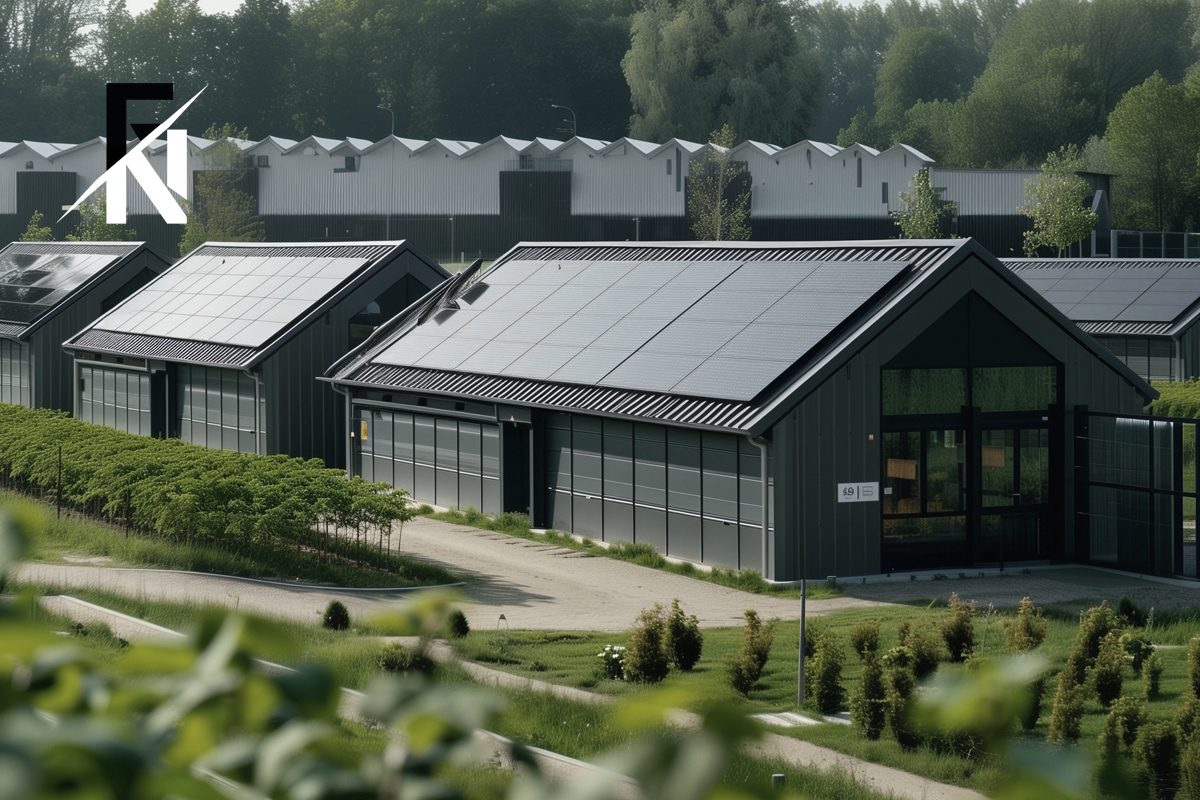
For fifteen years, ESG in industrial property was a reporting exercise. Someone in sustainability produced a document, someone in finance filed it, and the valuation went ahead on square metres, clear height, loading bays and power supply. The two conversations happened in different rooms and rarely met.
That stopped in 2026.
RICS — the body that sets valuation standards across most of Europe — updated its guidance to make ESG factors value-relevant. Not reportable. Value-relevant. The distinction is the whole story: it moves environmental performance from the sustainability officer's desk to the valuer's spreadsheet, where it changes a number that banks, buyers and boards all act on.
Most industrial owners have not yet revalued on this basis. Which means a significant number of balance sheets currently carry a figure that the market has already stopped agreeing with.
What the numbers actually say
The research is unusually consistent for a topic this new.
| Indicator | Value | Source |
|---|---|---|
| Rental premium, LEED/BREEAM certified | 6–9% | CBRE Research |
| Capital value premium vs uncertified | 14–16% | CBRE Research |
| Markdown on EPC F–G assets | 15–35% | MSCI Real Assets |
| Premium at sale, BREEAM brownfield | +22% | BRE Group; Knight Frank |
| Green loan discount on cost of debt | 20–50 bps | EIB; ECB |
Read the table from the top and it describes a green premium — a reward for doing the right thing. Read it from the bottom and it describes a brown discount — a penalty already priced in.
The second reading is the one that moves a board, for a reason that has nothing to do with environmental conviction: a premium is an opportunity you can decline, while a discount is a loss you are already taking.
Why the brown discount is the number that matters
A premium requires action to capture. A discount requires only time to deepen.
An energy-inefficient industrial building does not sit still while the market moves. Every year, three things happen to it simultaneously: the regulatory floor rises, the buyer pool narrows, and the cost of bringing it to standard increases with construction inflation. The gap compounds.
The EPBD recast (Directive (EU) 2024/1275) extends energy performance obligations to non-residential stock, with deadlines beginning in 2030. Three and a half years is not a long runway for a permitting-and-construction cycle on an occupied industrial site.
Meanwhile the buyer pool is already contracting. Institutional investors in industrial real estate — Blackstone, Prologis, CBRE Investment Management and their peers — apply structured ESG screening of 25 to 40 criteria before entering due diligence. An asset that fails the screen is not valued badly. It is never valued at all, because the conversation ends before the valuation starts.
An asset that fails the screen does not get a lower price. It gets no buyer in the room.
What this changes for an owner-occupier
If you occupy your own site and have no intention of selling, it is tempting to treat all of this as someone else's problem. Two mechanisms say otherwise.
The first is financing. Green loans and sustainability-linked loans price 20–50 basis points below the equivalent rate for non-ESG assets (EIB; ECB, Corporate Finance and ESG). On a €5M industrial mortgage, 40 basis points is €20,000 a year — every year, for the life of the facility. That is not a sustainability argument. It is a treasury argument.
The second is the balance sheet itself. The property line does not become irrelevant because you are not selling. It affects covenants, it affects refinancing, and it affects what the business is worth in any transaction — including the one you have not planned yet.
And the operating case, which arrives faster
The valuation argument is the one that gets attention in a board meeting. The operating argument is the one that pays first.
A LEED-certified industrial building uses 25–30% less energy than conventional stock, with average payback on the intervention in five to seven years (USGBC, LEED in Motion: Manufacturing; IEA). In a period where industrial energy costs have been the most volatile line in the P&L, a 25% structural reduction is worth more than its nominal value, because it also reduces variance.
The reporting obligation moved. The pressure did not.
Here the picture requires precision, because a widely circulated simplification is leading some companies to the wrong conclusion.
Since 18 March 2026, Directive (EU) 2026/470 — Omnibus I — has restricted mandatory CSRD reporting to undertakings above 1,000 employees and €450M turnover. The previous threshold was 250 employees. The change removes the overwhelming majority of European industrial SMEs from direct scope, and applies to financial years beginning on or after 1 January 2027.
This has been read in a good many boardrooms as a reprieve. It is not one.
Your largest customers are still in scope. The data they need for their own report comes from their supply chain — which is to say, from you. The Omnibus introduces the notion of a shielded undertaking: below 1,000 employees you may refuse information requests that exceed the voluntary VSME standard. But being permitted to refuse a request from your largest account is not the same as being able to afford it.
The pattern is already visible. Major manufacturers have begun requiring certified carbon footprints from their supplier base as a condition of contract continuity (CDP, Supply Chain Report; Science Based Targets initiative). The obligation did not disappear. It changed from a regulatory requirement into a commercial one — and commercial requirements have shorter notice periods.
The obligation moved from the regulator to your largest customer. That is not a relaxation. It is a shorter deadline with no transition period.
What to do with this
Three questions, in order of how quickly they can be answered.
What is the energy class of your main site, and when was it last assessed? Most industrial owners know the figure for their offices and not for their production buildings. If the assessment predates 2022, it predates the market repricing described above.
Which of your customers are above the CSRD threshold? They are the ones who will ask, and the first request usually arrives with a deadline attached rather than a conversation.
If you refinanced tomorrow, what would the valuer apply? The 2026 guidance, not the one in force when the asset was last valued.
None of these require a consultant to answer. They require an afternoon, and they establish whether the gap on your site is a rounding error or a structural one.
Where this sits in the series. This is the second issue of Factory Envision, the FabricaFuturo editorial series on the future of production environments. Each issue takes one topic, one source for every figure, and one point of view.
→ See what this means for your site
Sources: RICS Valuation Guidance 2026 · CBRE Research · MSCI Real Assets · BRE Group · Knight Frank · EIB · ECB · USGBC · IEA · Directive (EU) 2026/470 · Directive (EU) 2024/1275 · CDP Supply Chain Report · Science Based Targets initiative. Figures verified October 2026.